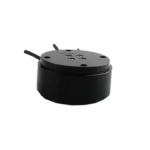
Models
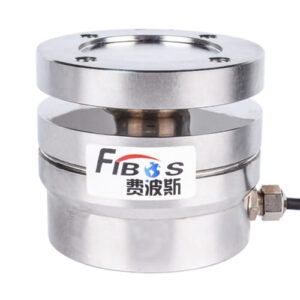
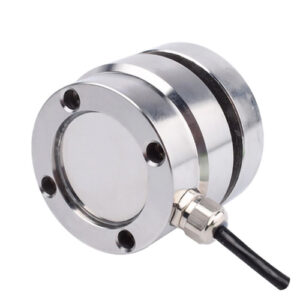
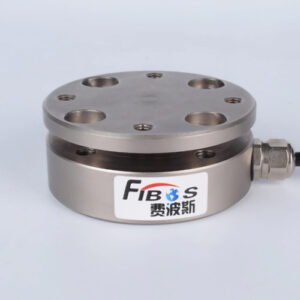
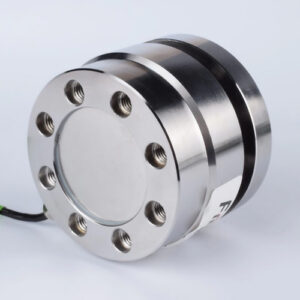
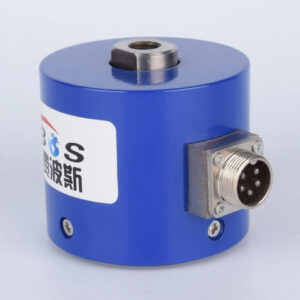
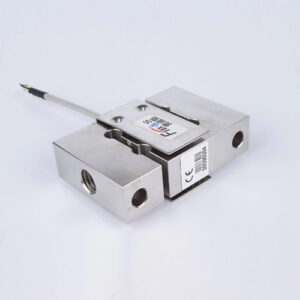
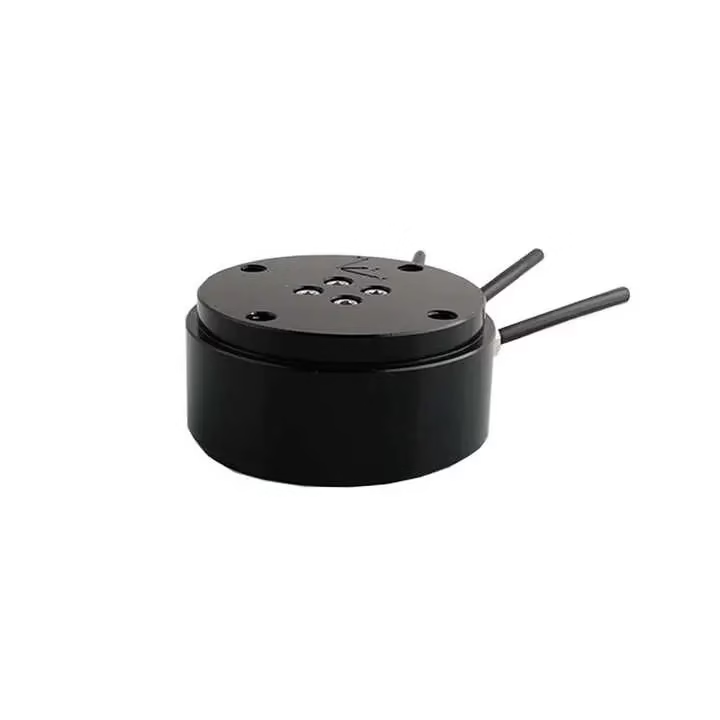
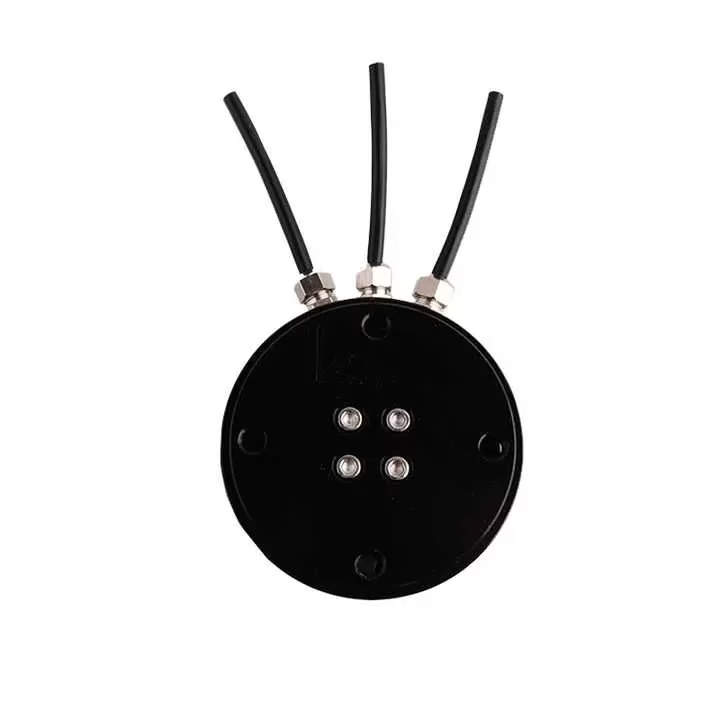
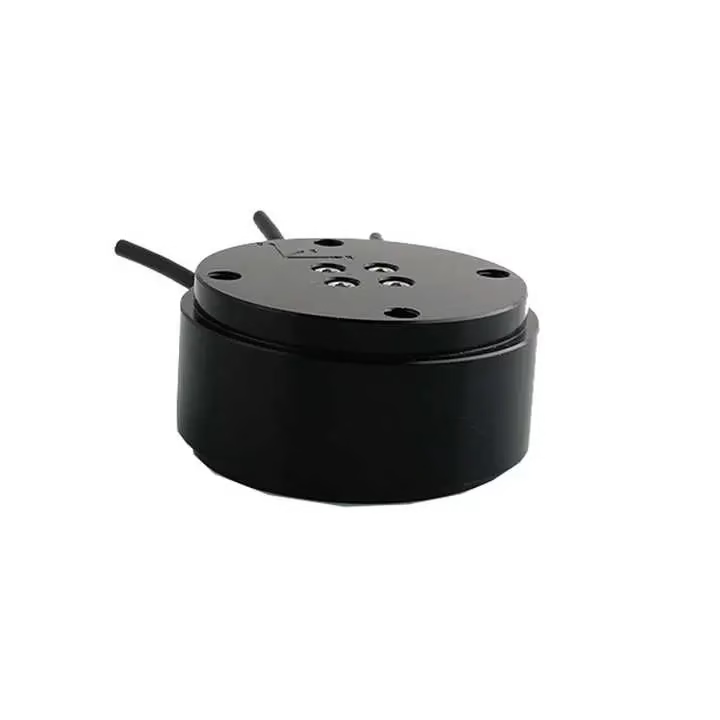
N45 Tri-Axial Force Sensor load cell for Robotic Arm Automated Production Line
Features
-
Outstanding Decoupling Performance: The N45 excels at reducing interference between different force dimensions. It ensures accurate, independent measurement for each axis.
-
It can measure Fx, Fy, and Fz forces with high precision at the same time. This provides users with accurate, comprehensive data.
-
The black aluminum housing resists impacts and wear. It protects the internal, precise components. Compared to the N40, the N45 boasts superior protective performance.
-
Strong Stability: Environmental factors do not affect it. So, it ensures consistent measurement results over time. Users can trust the data it provides.
-
Wide Application Range: It’s suitable for industrial and research use. It supports diverse scenarios with robust performance.
-
A simple design reduces the complexity of installation and fosters ease of use for the user.
-
Digital Intelligence: It integrates with control computers or terminals. This allows for advanced digital applications.
Applications:
Robotic arms. Rehab devices. Biomimetic tests. Aircraft lift monitoring. Robotic assembly. Educational research.
Industrial Manufacturing: In robotic control, sensors measure forces at the robot’s end effector. This enables high-precision operations. It is especially useful for assembly and polishing on automated production lines. It ensures accuracy, stability, efficiency, and product quality.
To test materials, sensors measure their strength, stiffness, and plastic deformation under force. They provide valuable data for research. Biomedical studies measure tissue and cell deformation and stress under various forces. This helps to explore biological systems.
Medical Applications:
Multi-axis force sensors in surgical tools provide real-time feedback on forces and moments. This allows doctors to perform surgeries with greater precision.
Aerospace: Wind tunnel tests use sensors to measure six-axis forces. They help design and optimize aircraft. During spacecraft docking and attitude adjustments, they ensure task safety and success.
Automotive Industry: Crash tests use sensors to measure impact forces and moments. They evaluate vehicle safety. For chassis and suspension development, they analyze forces at the wheels. They optimize the design for better stability and comfort.
In summary, six-axis force sensors have broad applications across industries. As technology advances, it will drive innovation in many fields.
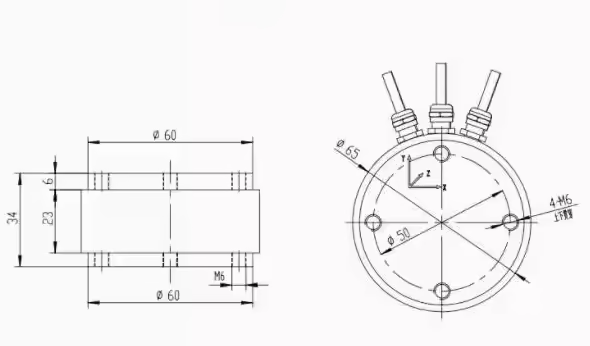
Dimensions
Specifications
Specifications: | ||
Rated Load | kg | 5,10,20,30,50,100 |
Sensitivity(X,Y,Z) | mV/V | 2.0±0.2 |
Zero output | FS | ≤±5% |
Comprehensive Error(X,Y,Z) | %R.O. | ±0.02 |
Coupling interference | FS | ≤3% |
Cross-talk(X,Y,Z) | F.S | ±2.2% |
Repeatability | R.O. | ±0.05% |
Creep/30 minutes | R.O. | ±0.05% |
Excitation Voltage | VDC | 10 |
Maximum Excitation Voltage | VDC | 15 |
Output resistance | Q | 350±3 |
Insulation resistance | MQ | ≥3000(50VDC) |
SafeOverload | %R.C. | 150 |
Ultimate Overload | %R.C. | 200 |
Material | -- | Aluminum Alloy/Alloy stee |
Degree of protection | -- | IP65 |
The length of the cable | m | 3 |
본 게시물은 케이센서스에 저작권이 있습니다. 무단으로 전제 및 도용 시 법적으로 처벌 될 수 있습니다. Copyright 2025. 케이센서스(KSENSORS) Co. All rights reserved. |